

Choosing joy doesn’t mean ignoring your pain. It means learning to see your life the way God does and anchoring yourself in that truth.
You may have prayed, waited, and done everything right, yet it still feels like your world is falling apart. The job didn’t work out. The diagnosis was worse than expected. God’s silence feels overwhelming.
You believe God is good, but it’s hard to feel that right now. So, where do you go when joy feels out of reach?
You may not be able to change your circumstances. But you can shift your perspective. Seeing life through God’s lens, not just your own, can mean the difference between despair and resilience.

Current Series
What if Love Wasn't About Feelings... but FAITH?
Find love that transforms relationships, heals wounds, and reflects the heart of God.
Free MP3Listen NowTable of Contents
- How Your Perspective Changes Your Experience
- How Did Paul Remain Joyful While in Prison?
- How Can I Be Joyful Despite Tragedy, Loss, or Grief?
- What Does the Bible Teach About Joy in All Circumstances?
How Your Perspective Changes Your Experience
Life is filled with hardships—job losses, betrayal, illness. I’ve walked alongside people in painful seasons, and I’ve experienced it myself.
Many people let circumstances shape their reactions. But I’ve learned a formula to help you choose joy regardless of what is happening in your life:
Your Circumstances + Your Perspective = Your Experience
Paul understood this well. Under house arrest in Rome, chained and awaiting possible execution, he wrote the book of Philippians—a letter filled with joy. Not complaints. Why? Because he had clarity about his purpose, not control over his situation.
How Did Paul Remain Joyful While in Prison?
Paul’s imprisonment in Rome was humiliating by cultural standards. Yet he didn’t let that narrative define him.
He didn’t focus on the chains. He focused on Christ. Paul saw his suffering as part of God’s plan, not a detour from it.
He wasn’t consumed by what was taken from him. He was captivated by what God was doing through him.
When you stop asking, “Why is this happening?” and start asking, “What is God doing?”—your story begins to shift.
How Can I Be Joyful Despite Tragedy, Loss, or Grief?
Years ago, my neighbor Gary lost his custom cabinetry business to a fire. Depressed and defeated, he withdrew. Then it happened again. A second fire destroyed everything.
But this time, his response was different.
“The Lord gave, and the Lord has taken away; blessed be the name of the Lord.” — Job 1:21
Gary thanked God for what remained: his wife, his son, his grandson. Within days, he found work for his employees. A week later, he was outside playing with his grandson.
His perspective didn’t erase his pain. But it gave him peace.
Going through hard times? God wants to teach you how to handle adversity.
When you choose to do these things, you’re living from faith instead of fear:
- Trust Him when you want to take control.
- Choose peace when the world says panic.
- Forgive when bitterness feels easier.
Joy isn’t denial. Joy is choosing to see your season through God’s loving perspective.
Joy isn’t forced positivity. It’s choosing to see your pain through God’s eyes and trusting that He’s doing more than you can see.
Choosing joy doesn’t mean ignoring your pain. Explore God’s perspective and find strength by seeing your season the way He does.
What Does the Bible Teach About Joy in All Circumstances?
Philippians 1 shows us how joy is not based on comfort, but perspective:
- Have an Upward Focus (Philippians 1:3–6): Gratitude rewires your soul. Paul begins by thanking God, not because everything felt good, but because God’s work in the Philippians gave him hope.
- Have an Outward Focus (Philippians 1:7–11): Paul prayed for others even in his pain. Even in chains, Paul prayed for others. His circumstances didn’t shrink his heart but expanded it. Suffering didn’t make him self-absorbed.
- Have a Missional Mindset (Philippians 1:12–18): Paul’s suffering advanced the Gospel. Paul saw meaning in what others saw as loss. God used his pain to reach places Paul couldn’t have reached otherwise, including Caesar’s own guard.
- Hold Onto Eternal Hope (Philippians 1:18–26): Paul trusted God with life or death. Paul knew either way, he would be with Jesus. God may not deliver you from every trial, but He will always see you through it.
- Have Holy Expectations (Philippians 1:27–30): Suffering is part of the calling. Paul reminds the church that suffering is not a sign of failure, but a sign of faith.
Paul’s joy didn’t come from avoiding hardship. It came from seeing purpose in it. Philippians 1 shows us that when you align your focus with God’s, even the darkest seasons can become places of deep transformation.
True joy comes from focusing on God’s bigger picture, not from self-analysis. Contrary to what the world says, you’ll find contentment when you stop looking inward and start looking upward.

Ready to Choose Joy?
Joy is not pretending everything’s fine. It’s believing God is still good when things are not.
Whatever season you’re in, joy is still available because God is present.
Want to go deeper? We’ve only begun to explore Paul’s perspective. Gather your small group together for an in-depth study on finding joy in hard places: “I Choose Joy” Small Group Study
Want More Resources?
Join others walking through the “I Choose Joy” series, designed to help you find biblical joy in every season of life:
Recommended Articles
- Three Questions Overcomers Ask in Response to Crisis
- 4 Clear Steps To Applying the Wisdom of God
- 6 Bible Verses About God’s Love for Us
Related Resources
Written By
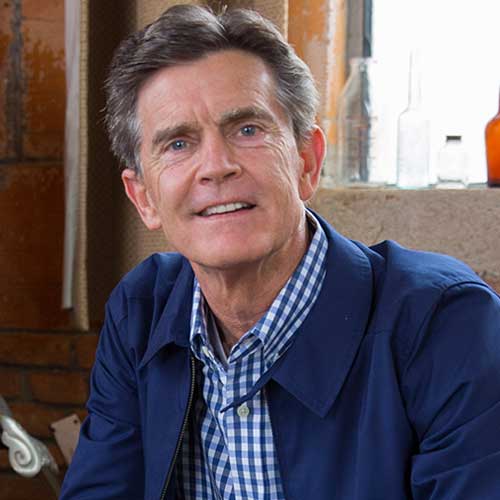
Chip Ingram
Founder & Teaching Pastor, Living on the Edge
Chip Ingram is the CEO and teaching pastor of Living on the Edge, an international teaching and discipleship ministry. A pastor for over thirty years, Chip has a unique ability to communicate truth and challenge people to live out their faith. He is the author of many books, including The Real God, Culture Shock and The Real Heaven. Chip and his wife, Theresa, have four grown children and twelve grandchildren and live in California.
More Articles by Chip